304 notes tagged as ["Online advertising"]
Filter your results by choosing one or more tags below or type your query in the search field above.
-
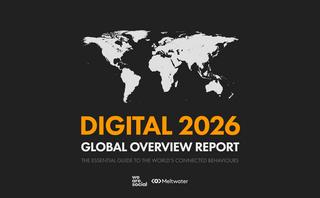
The definitive guide to how the world behaves online. Understand consumers around the world with the Digital 2026 Global Overview Report. Access 600+ pages of data on digital trends like the amount of time internet users aged 16+ spend on social media, including watching TikToks and Reels (13 hours 45 min), the estimated global digital ad spend, including search and social media ($862 billion), the percentage of internet users aged 16+ who research brands & products online before buying (50.4%), the percentage of internet users aged 16+ who purchase products online weekly (56.5%), the number of people who use AI each month (over 1 billion).
-

Holiday 2026 will be shaped by earlier shopping, social commerce, creator influence, and AI-assisted discovery. Nearly half of consumers browsed before Thanksgiving in 2025, while shoppers increasingly discover and buy products through social platforms and creator content. Advertisers should start media earlier, invest in discovery channels, prepare product data for AI shopping assistants, and measure business outcomes across retail media, ecommerce, in-store, and creator ecosystems.
-
What does a click cost on social ads right now? How much are advertisers getting back for every dollar they spend? And if you’ve already picked your platform, is it the one doing the most for your budget? Ad platforms change by the week, but the data holds long enough to answer questions like these.
For the 2026 Social Ads Report , we analyzed 628,969 campaigns from 44,355 advertisers running ads on Meta and TikTok , worth $471 million in spend , and lined up the same six months of 2025 and 2026 side by side. It adds up to a clear, benchmark-by-benchmark look at where social ad money goes, what a dollar buys on each platform, and how that has changed since last year.
-
You are currently enjoying the free trial mode which gives only back 3 results for each of your searches.
Click on Reset Search Tags to try another search.
Free NewsletterOnly paid members can get full access to the most recent content, create their own tags & personal folders, assign search results to specific projects and much more… all of this for less than 99c a day.
-
State of digital advertising 2026
The digital advertising landscape experienced shifts over the past year, driven by rapid innovation in generative AI, evolving consumer media habits, and the expansion of streaming surfaces. State of Digital Advertising 2026 welcomes you to the future of online marketing. AI is here, and it is all-encompassing. But don’t take our word for it; see the data for yourself. All of your burning advertising questions, answered. Plus a few you didn’t know you needed.
-
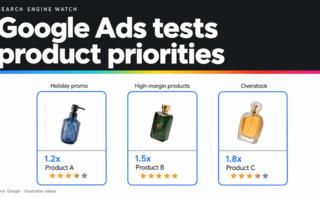
Google Ads tests a way to steer spending toward priority products
Google Ads is testing Product Value Optimization, a feature that lets retailers adjust how much selected products are worth to its automated bidding system. The aim is to give advertisers more influence over which products their campaigns pursue, including items with stronger margins or stock they need to clear. Google’s product announcement describes the intended uses.
Search Engine Roundtable reported the beta on September 14, following a LinkedIn post from advertiser Adriaan Dekker, who credited Tiago Goncalves for sharing it. Google already includes the feature in its Google Marketing Live 2026 announcements, so the latest sighting should not be confused with a general launch.
-
Google expands Waze Ads to more countries
Google has expanded access to Waze Ads beyond the United States and to a total of 42 countries. Google updated the PMax help documents in the Google Ads help center with this new information. Waze Ads are currently available across select global markets through Performance Max for store goals campaigns bidding on Store Visits, Store Sales, or Local Actions Directions. Supported countries are listed below:
-
Paid media ROI research report
See what 300+ paid media marketers and agencies reveal about what’s driving ROI, where budgets are going, and why the biggest opportunities are after the click. Landing pages were the strongest predictor of paid media ROI measured. Marketers most confident in their landing pages are 4.5x more likely to exceed their ROI targets than those who are less confident.
Learn where paid media teams are investing, what’s holding ROI back, and why marketers are focused on stronger post-click experiences.
-
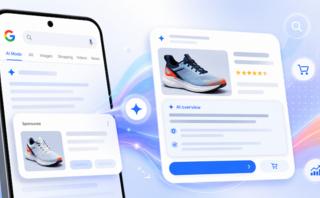
The 5 Google AI Mode ad formats (and how they work)
Ads have been showing within Google’s AI Mode since around the 19th of November 2025. This is despite the announcement at Google Marketing Live in May, with testing apparently being in motion for months before the first discovery, though I’m using the November 2025 date as a key milestone in the rollout, as this was when they had clearly ramped up their appearance significantly.
-
The agentic advertising economy
As with prior tech disruptions in advertising, consumers and businesses’ rapid adoption of AI will be a growth engine, a source of discontinuity, and an accelerant for the many tectonic shifts already underway across the ecosystem. Three-quarters of advertisers we surveyed expect AI to increase total media spend, and one-third believe it will drive at least a 10 percent increase in return on ad spend (ROAS). At the same time, spend may continue to move away from the open web, while direct media deals that bypass agencies and programmatic intermediaries gain share.
-

5 Reasons full-funnel commerce media needs social
Full-funnel commerce media depends on social to create and amplify demand before shoppers ever search or browse a retailer. While retail media and paid search capture existing intent, social drives discovery, shapes brand perception, and influences research across platforms like TikTok and YouTube. When social is integrated into a commerce media strategy, it fuels search volume, improves retail performance, and strengthens results across the entire program.
-

How AI is making ad creative faster — and more fair
The shift toward AI is not just about producing ads faster, it’s about giving creative capability to everyone, writes Amazon’s Nikhil Nanivadekar. AI tools can turn a difficult and expensive process into a streamlined, exciting new creative possibility, according to Amazon’s Nikhil Nanivadekar, principal engineer, consumer ad experiences at Amazon. Opinions are the author’s own.
Advertising has always celebrated creativity, but for many brands, it came with real constraints. Big ideas required big budgets, specialized teams and long production cycles. Speed was a luxury, and experimentation carried risk. For too many businesses, the gap between a great idea and a great ad felt impossibly wide.