1397 notes tagged as ["trends"]
Filter your results by choosing one or more tags below or type your query in the search field above.
-
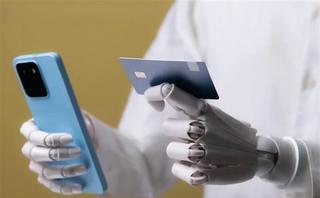
Once AI can create carts and payments, it’s a transaction channel. Give it the same governed commerce access as any other channel. For years, digital teams could treat a new source of traffic primarily as an acquisition problem. Search sent customers to a website. Social sent customers to a website. Affiliates sent customers to a website. Teams optimized discovery, attribution and conversion after the visitor arrived.
-
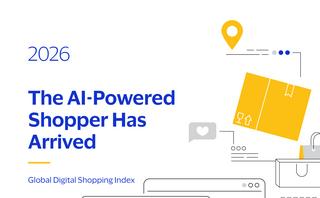
PYMNTS surveyed 5,841 consumers and 1,185 merchants across the U.S., Brazil and the UAE and found that AI, mobile and payment choice are reshaping the shopping journey. Nearly half of online shoppers used AI in their latest purchase, but many merchants are still moving too slowly.
Inside the index:
• AI has become part of the shopping journey. Nearly half of online shoppers used AI for their latest purchase, and ChatGPT’s share as a product research tool jumped from 2% to 30% in two years.
-
Loyalty benefits used to show up at checkout: a card swiped, a code entered, a discount applied after the decision was already made. That moment is moving earlier, into the conversation where an artificial intelligence agent is still deciding where to buy.
Synchrony announced an enterprise collaboration with OpenAI on Aug. 17 to power what the companies call “the next era of agentic commerce,” with plans to launch a ChatGPT plugin that lets shoppers browse promotional financing and partner offers from the Synchrony Marketplace directly inside a ChatGPT conversation.
-
You are currently enjoying the free trial mode which gives only back 3 results for each of your searches.
Click on Reset Search Tags to try another search.
Free NewsletterOnly paid members can get full access to the most recent content, create their own tags & personal folders, assign search results to specific projects and much more… all of this for less than 99c a day.
-
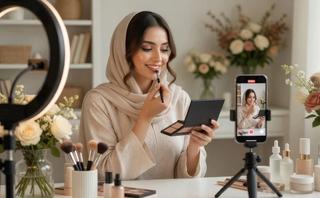
Why beauty ecommerce is leading the way in online retail
Beauty brands have cracked the code for social commerce. What can wider ecommerce markets learn from their successes? Beauty brands are having a moment on social media, with online beauty sales growing at roughly triple the rate of the wider retail sector, and haircare and skincare emerging as some of the sector’s strongest-performing categories.
Key Takeaways:
The beauty industry is outperforming other major categories online
-
2026 Social commerce statistics: Platforms, companies, trends
The social commerce report examines top social commerce platforms, such as TikTok, Instagram and Vinted. It discusses the trend of e-commerce on social media and shows how to participate. Every number in this report is derived from real purchase data from card issuers and payment processors cross-validated with retailer data, traffic signals, and public market data.
What’s inside:
Discusses social commerce statistics, its revenues and leading platforms
-
Global digital shopping index: The agentic commerce deep dive
PYMNTS Intelligence and Visa Acceptance Solutions surveyed 5,241 consumers, 1,185 merchants and 150 acquirers across the U.S., Brazil and the UAE. The data shows AI agents are already changing how people shop, but trust at checkout remains the real hurdle.
Inside the July Index
Consumers divide trust between AI discovery, AI recommendations and AI-led payments.
Merchants are deciding which agentic commerce use cases deserve investment now and which still carry too much risk.
-
State of beauty industry trends 2026
For both brands and retailers, beauty’s competitive landscape is in flux: Players with novel products, as well as new entrants from adjacent categories, are gaining ground against incumbents. And as product discovery and purchase migrate toward creators, social platforms, and digital marketplaces, legacy beauty channels such as department stores and specialty retail chains must find new ways to attract and retain shoppers.
-
Beauty content that converts
Beauty shoppers have never been more connected, informed, or selective. As wellness, self-care, and digital commerce continue to reshape the industry, beauty brands face a new challenge: creating content that not only inspires consumers but also converts across increasingly complex shopping journeys. From AI-powered product recommendations and social commerce to evolving consumer expectations around transparency and personalization, the rules of beauty engagement are changing rapidly.
-
Holiday shopping starts earlier, raising the stakes for brands
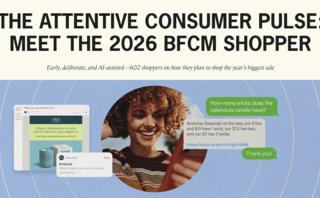
Attentive, the omnichannel marketing platform redefining how brands and people connect, released new Consumer Pulse research revealing that holiday shopping continues to kick off well before Black Friday, with some consumers starting as early as the summer months. The survey found that 83% of consumers begin planning holiday purchases before Black Friday, while 71% plan to start shopping before the holiday shopping event, up 12 percentage points from last year. As consumers spread purchases across a longer shopping season, brands have more opportunities to influence purchase decisions by engaging customers with timely, personalized experiences throughout the journey.
-

Your customers are already shopping with AI. You just don't know it yet
What if your next competitive challenge isn’t another retailer, but an AI assistant influencing what your customers discover, compare and buy? Customer journeys are changing. Consumers are increasingly turning to AI-powered assistants to find information, explore products and support purchasing decisions. Instead of navigating multiple websites themselves, they can ask an AI assistant to help them identify the right product, compare options and, increasingly, complete a transaction.
-
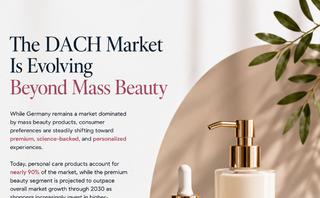
DACH beauty trends 2026: AI, personalization & consumer insights
Discover how AI, science-backed skincare, personalization, and shifting consumer expectations are transforming beauty purchasing across Germany, Austria, and Switzerland. The beauty industry in the DACH region is entering a new era. As consumers become more informed, digitally connected, and results-driven, traditional approaches to beauty marketing and product discovery are losing ground to personalized, science-backed experiences.