946 notes tagged as ["marketing"]
Filter your results by choosing one or more tags below or type your query in the search field above.
-

How to use AI and automation in your measurement to decide and act before the opportunity’s gone. Marketers keep asking the same questions about AI and automation: how do I actually use it in my day-to-day? The pressure to adopt it is real - 8 in 10 marketing teams say they’ve already missed opportunities because their workflow couldn’t keep pace with the speed the business now demands of them ( Adobe Business, 2026).
-

How the most innovative companies build creativity into their promotions. You’ll learn what 1,800 consumers reveal about promotion effectiveness, how to move beyond basic discounts with 8 Creative Currencies as well as how to scale creative promotions with the right architecture.
-
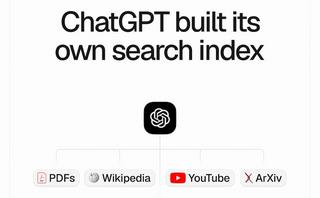
OpenAI appears to be testing when ChatGPT should use its own search index instead of relying on results supplied by third-party search providers. New research published by Peec AI maps a collection of internal ChatGPT search indexes and, more interestingly, points to experiments comparing OpenAI’s own index with external search results.
The existence of an OpenAI search index itself isn’t entirely new. OpenAI acknowledges that ChatGPT can retrieve information from its “indexed and cached web content,” while previous investigations have identified an internal system known as Labrador.
-
You are currently enjoying the free trial mode which gives only back 3 results for each of your searches.
Click on Reset Search Tags to try another search.
Free NewsletterOnly paid members can get full access to the most recent content, create their own tags & personal folders, assign search results to specific projects and much more… all of this for less than 99c a day.
-
Win peak season before it peaks
Peak season starts earlier, spans more channels and gives shoppers more choice. For marketers, that means the traditional holiday playbook no longer cuts it.
StackAdapt’s Peak/Festive Season Marketing Guide reveals the trends and behaviours shaping peak season in 2026, and how marketers can reach shoppers at every stage of the journey.
Learn how to build demand earlier, capture intent and drive repeat purchases with AI-powered creative, emerging channels, unified shopper insights and programmatic tactics. Plus, discover how brands are using contextual targeting and digital out-of-home to turn peak season strategies into action.
-
2026 Creator marketing in the age of AI research report
The brands defining creator marketing in 2026 are building something new: programs designed for an internet where AI synthesizes answers, earned content compounds, and human creators carry more strategic weight than ever.
Drawing on original CreatorIQ research and 250M+ social posts, Creator Marketing in the Age of AI maps the choices leading brands are making across discovery, creator strategy, human authenticity, and infrastructure — and what it takes to build a program ready for what’s next.
-
Paid media ROI research report
See what 300+ paid media marketers and agencies reveal about what’s driving ROI, where budgets are going, and why the biggest opportunities are after the click. Landing pages were the strongest predictor of paid media ROI measured. Marketers most confident in their landing pages are 4.5x more likely to exceed their ROI targets than those who are less confident.
Learn where paid media teams are investing, what’s holding ROI back, and why marketers are focused on stronger post-click experiences.
-
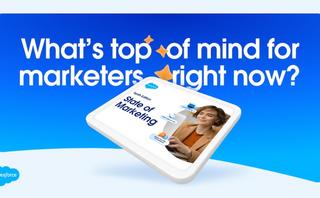
The new rules of marketing are being written right now
We surveyed 4,500 marketing leaders worldwide, and the consensus is clear: the era of one-way conversations is over. Today’s customers don’t want to be talked at — they want a dialogue. While 83% of marketers recognize the shift toward personalized, two-way messaging, only one in four are satisfied with how they use data to power those moments. The teams closing that gap are using agentic AI to deliver personalized engagement at a scale that once felt out of reach.
-

Personalization playbook second edition
The Personalization Playbook is your go-to guide for proven, high-impact omnichannel marketing tactics that drive engagement, conversions, and customer loyalty. Packed with challenge-led use cases and detailed, AI-infused automation workflows, this Playbook helps you take the guesswork out of execution and build high-performing campaigns.
What’s inside:
Tackle your use cases head-on! This Playbook gives you step-by-step guidance for orchestrating data-driven campaigns and applying AI to hyper-personalize each touchpoint along the customer journey.
-
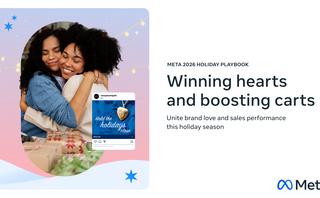
Inside Meta’s 2026 holiday guide
Meta has recently released its 34-page 2026 holiday marketing guide titled “Winning Hearts and Boosting Carts”. and it makes one core argument: brands that wait until November to plan their holiday push are already behind. The guide lays out where holiday shoppers spend their time, why creators have become central to driving purchase decisions, and a quarter-by-quarter timeline for building campaigns months ahead of peak season.
-

What 14,473 festive shoppers told us about global shopping habits
We surveyed thousands of festive shoppers from 18 countries to better understand how people are discovering products, weighing purchase decisions and how they move from browsing to buying. Every festive season, marketers face the same core questions: where do shoppers discover, compare and decide? How do they progress from “I need ideas” to “I’m ready to buy”?
This year, the answers are shifting. Social commerce is accelerating. AI is changing how shoppers search. Creators have become trusted shopping advisors. The habits that seemed settled a year ago look different now.
-

Word of mouth, word of machine
As AI increasingly influences how consumers discover, evaluate and choose brands, the rules of marketing are being rewritten. Word of Mouth, Word of Machine explores what this shift means for brand builders and argues that success in the AI era requires more than visibility alone. Brands must be both machine-readable and human-referenceable.
The report introduces five principles for future-fit growth: brand clarity, machine readability, creative consistency, human referenceability and authority. Together, they provide a practical framework for ensuring brands are understood by AI systems while remaining meaningful to people.